

If you’re trying to get SEO clients consistently in 2026, I’ll be honest — it’s not as easy as posting good case studies and waiting for leads to come in.
The market is crowded.
Clients have more options.
And even if you’re good at SEO, that alone doesn’t always bring you steady clients.
But the opportunity is still there!!
You just need to know how to position your service, where to find the right prospects, and how to start conversations that turn into booked calls.
That’s what I’ll help you with in this guide.
I’ll walk you through 10 practical strategies you can use every week to find, attract, and close SEO clients in 2026.
Ready? Let’s get started!
How to Get SEO Clients – TOC
TL;DR: The Best Method to Get SEO Clients in 2026
If you want to know how to get SEO clients in 2026, focus on building a repeatable client acquisition system. The most effective strategies include:
- Value First Cold Email Outreach (The Fastest Way): Reach out directly to businesses via emails that need SEO services, instead of waiting for them to find you.
- LinkedIn Outreach (Best for B2B & High-Ticket): Build a strong LinkedIn presence that attracts elite clients, then reach out to decision-makers with specific, value-driven insights about their SEO performance.
- Get Referrals from Clients (Highest Conversion Rate): Ask happy clients for introductions right after a successful milestone, not when you send the invoice.
- Offer Free SEO Audits (The Free Audit & Quick Win): Record a quick Loom video showing 2-3 fixable problems on a prospect’s site to start the conversation.
- Rank Your Own Website First (Best for Long-Term Scaling): Target keywords your ideal clients search for, rank your own pages, and let inbound leads prove your credibility for you.
- Start on Freelance Platforms (Best for Beginners): Land your first few clients on Upwork and Fiverr Pro by selling outcomes, not “SEO packages.”
- Show Up in Communities and Forums (Best for Building Authority): Answer SEO questions on Reddit, Slack groups, and Facebook groups until prospects start reaching out to you.
- Events, Webinars, and Speaking (Best for High-Ticket Clients): Get in front of business owners at local meetups and industry events as the SEO expert in the room.
- Partnerships and White-Label SEO (Best for Scaling Revenue): Build referral partnerships with web designers and PPC agencies who need SEO for their clients, and white-label your services to take on multiple clients through a single relationship.
- Paid Ads (Best to Fill Fast Pipeline but Expensive): Run targeted Google or LinkedIn ads to fill pipeline gaps fast, but only when your close rate and project value support the cost per lead.
👉 If you want the fastest path to your first SEO client, start with cold email outreach.
10 Best Methods to Get SEO Clients That Actually Fill Your Pipeline in 2026
Below are 10 proven ways to get SEO clients.
Some methods work fast, while others take time. But all of them have helped SEO professionals win real clients.
1. Cold Email Outreach
Cold email outreach is one of the smartest ways to grow your SEO client base.
It’s one of the most cost-effective and scalable B2B lead generation strategies that lets you reach the right businesses instead of waiting for them to find you.
Simply put, cold emailing means sending short, personalized messages to prospects who haven’t heard from you before.
The benefits are clear: it’s cost-effective, easy to scale, and keeps you in full control of your pipeline.
You can use tools like Saleshandy that help you to pull verified emails and phone numbers from a huge database of B2B contacts and reach out directly.
Here is the step-by-step process for how the sales team and I use this approach every week, and it consistently helps us start new conversations and generate leads.
Step 1: Find Your Ideal Prospects
Your results depend entirely on your prospect list. Even the best email will fail if it is sent to the wrong people.
With Saleshandy’s Lead Finder, you can build a targeted list in just a few minutes.
1. Go to Lead Finder
Open Saleshandy and start adding filters.
Now, set your location and choose your target country, state, or city.
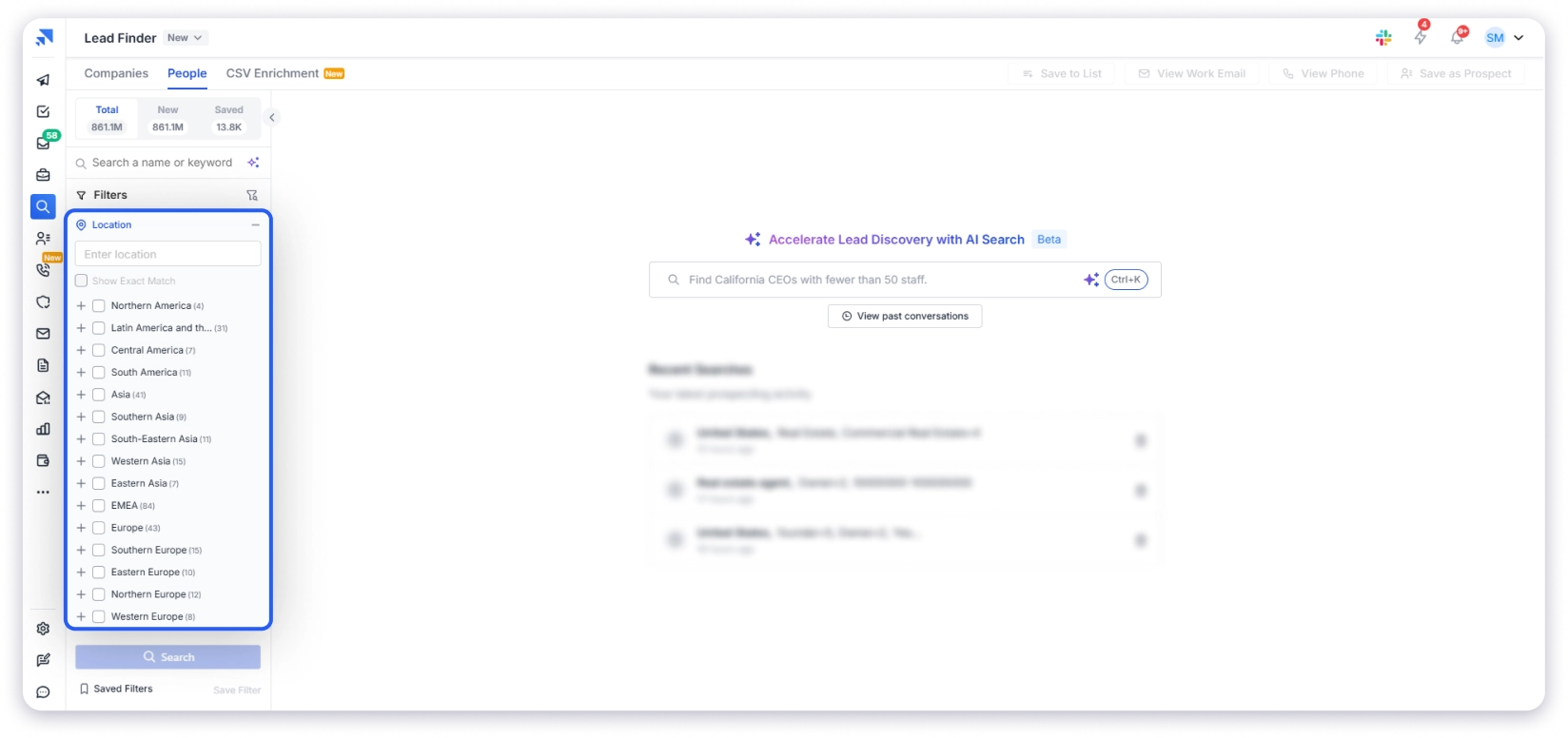
PS: If you are a small business, local targeting can work really well.
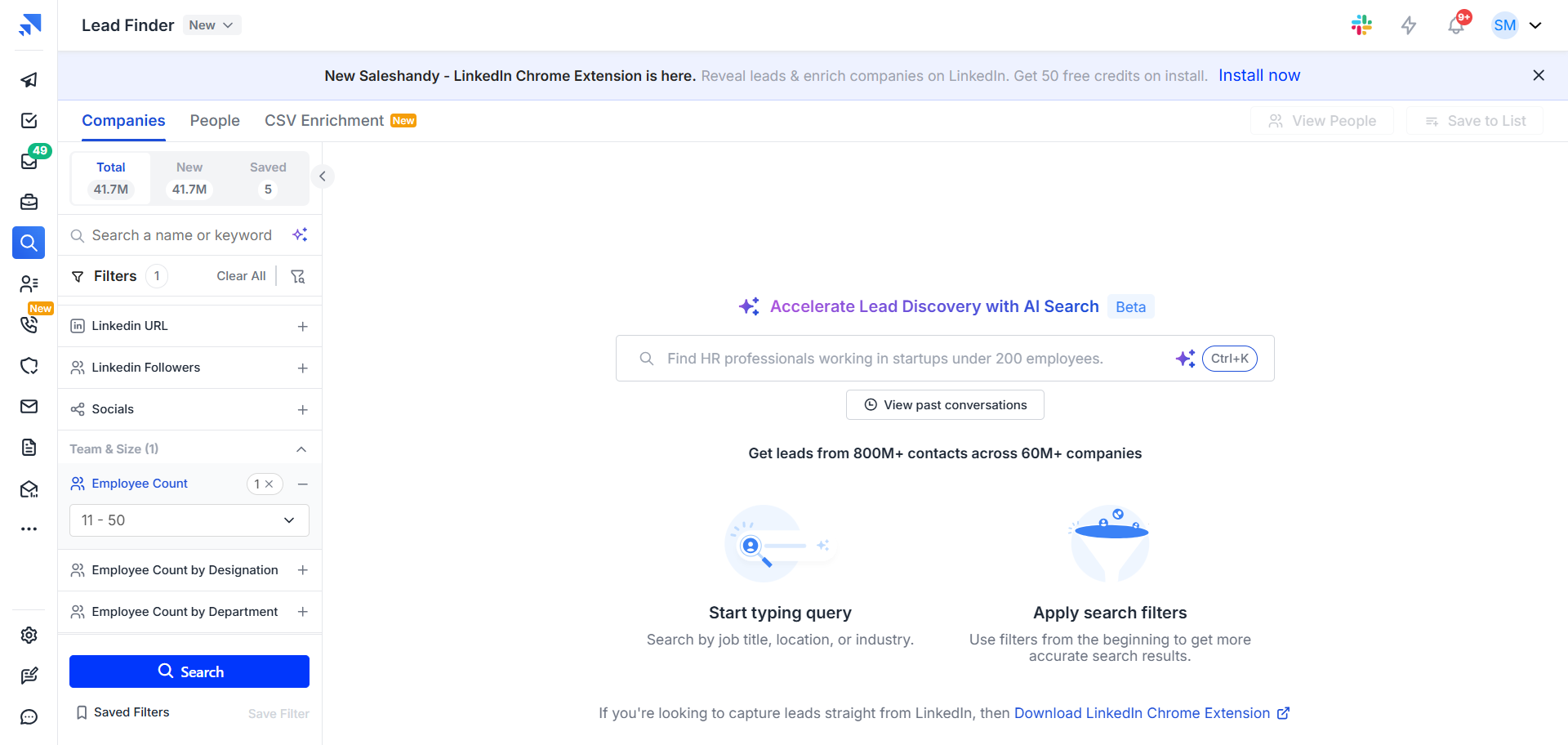
2. Set Company Size
Go for companies with 11–50 employees because small teams usually outsource SEO.
3. Pick an Industry
Choose an industry like SaaS, ecommerce, professional services, or local businesses, preferably one where you already have experience providing SEO services.

4. Select Decision-Makers
At the end, select the decision-makers you want to reach out to, such as Founders, CEOs, Heads of Marketing, or Heads of Growth.
Once your filters are set, your SEO client list is ready.
Now, you can export the list and import it directly into a Saleshandy sequence.
💡 Pro Tip: Startups that have recently raised money are under pressure to grow and often do not have an in-house SEO expert, which makes them more likely to respond. So, make sure you use the “Recently Funded Companies” filter.
Step 2: Compose Cold Emails That Get Replies
Now, you need to write your email in Saleshandy’s email composer.
Here are the best practices to follow when writing your cold email.
- Icebreaker: Start with something personal: a recent achievement, a challenge, or a competitor they’re missing.
- Value & Offer: Show how your service solves a specific problem, gets results quickly, and is cost-effective.
- Actionable CTA: End with a polite next step: reply, book a call, or schedule a meeting. Keep it easy to act on.
Bonus: If you don’t want to write your email, you can use this simple template:
📄 Cold Email Template for SEO Client Outreach
Subject: Quick question about [Company Name]’s Google visibility
Hi [First Name],
I noticed your [city/service] page isn’t ranking in Google’s top results for “[relevant keyword].” Right now, [Competitor 1] and [Competitor 2] are above you, likely getting traffic and leads that could be yours.
I put together a quick list of improvements you could make. Happy to send it over if you’re interested.
[Your Name]
[Your Website]
💡 Pro Tip: Use Saleshandy merge tags to personalize each email automatically — first name, company, keyword, city, etc. Your emails will feel hand-crafted without extra effort.
Step 3: Follow Up Without Sounding Salesy
Most replies don’t come from the first email—they come from the second, third, or fourth. Each follow-up should add value, not just remind them you exist.
Here is the sequence you can follow
- Email 2: Share a new finding from their website.
- Email 3: Share a case study or proof of results.
- Email 4: Offer a useful tip they can implement even if they don’t hire you.
Every message should give them a reason to reply.
Step 4: Track and Scale Your Outreach
Tracking your results is essential to know what’s working and what needs improvement.
With Saleshandy, you can easily monitor key metrics like:
- Open Rate: Are prospects opening your emails?
- Reply Rate: Are they responding to your messages?
- Positive Reply Rate: Are the replies showing interest or intent to engage?
- Click Rate: Are prospects interacting with your links or content?
Focusing on positive reply rates helps you measure real engagement, not just any reply.
High-performing emails combined with a targeted prospect list = a growing pipeline of conversations and clients you can scale.
For a deeper dive, check out the full cold emailing guide.
2. Make LinkedIn Work for You
If you want to get SEO clients on LinkedIn, the key isn’t sending cold DMs.
The real power comes from showing up consistently and sharing your expertise.
Post about SEO wins, industry trends, strategies that worked, and lessons from client projects.
Keep it simple; real insights from real work resonate far more than long-winded self-promotion.
Over time, your posts demonstrate value, attract attention, and build trust with prospects before you ever reach out.
Most people skip this step. They send connection requests and immediately pitch their services.
Nobody reads a three-paragraph note about your agency’s awards or experience.
What matters is results—case studies, examples of rankings improved, or traffic growth you delivered. That’s what makes prospects interested in engaging with you.
💡 Expert Tips:
- Post consistently for several weeks; engagement grows gradually.
- Respond to comments and DMs to nurture connections.
- Remember, the LinkedIn algorithm decides who sees your content, and connection limits cap weekly outreach.
Use LinkedIn to build credibility and warm up prospects, but don’t rely on it as your only lead generation channel.
3. Get Referrals from Existing Clients
Word-of-mouth is still one of the most effective ways to attract new business.
Referrals can generate up to 5 times more sales than traditional paid media and influence 20–50% of all purchasing decisions.
Clients respond to proof, authority, and trust.
In 2026, people aren’t just hiring SEO agencies; they are hiring people they can rely on. That’s why referrals are so powerful.

A referral from a trusted source validates your work upfront, shortens the sales cycle, and often brings in clients who are easier to work with.
However, referrals don’t happen automatically.
You need to build a system to encourage them.
For example:
- Ask satisfied clients for introductions to businesses in their network.
- Make it easy for clients to refer you, with a small incentive, a thank-you note, or simple guidance on how to share your work.
- Provide proof and case studies that clients can confidently share with others.
When done consistently, referrals become a reliable, high-converting source of SEO clients, perfectly complementing cold email and LinkedIn outreach.
4. Offer Free SEO Audits
A free audit is one of the fastest ways to win trust.
You’re not asking anyone to believe you—you’re showing them what you can do.
Most people overcomplicate this.
They create a 20-page report nobody asked for.
That’s free consulting, not prospecting.
Here is how you can keep it simple and personal.
1. Send a Short Video Audit
Record a 3-minute Loom video walking through a prospect’s website and highlight 2–3 things they can fix. Check their Domain Authority, run their site through PageSpeed Insights, and spot title tag or keyword gaps.
Don’t bother with long reports. Just send the video. It’s personal, shows you actually looked at their site, and proves your expertise. End with something simple like:
“Happy to send a full breakdown if you’re interested.”
This approach pairs perfectly with cold email. The video serves as the hook, and your email delivers it.
2. The “Quick Win” Strategy
Take it one step further. Instead of just pointing out issues, fix one thing for free.
Offer to optimize their Google Business Profile or fix a critical technical error on their site, and set a clear timeframe.
If they see improvements in impressions, rankings, or visibility during that window, the conversation naturally shifts from “Should I hire an SEO person?” to “How do I keep this going?”
That’s when you pitch your long-term contract.
5. Rank Your Own Website First
If you can’t rank your own site, why would a client trust you with theirs?
Ranking your own pages for keywords your ideal clients search for like “[your city] SEO services” or “ecommerce SEO consultant”is one of the most overlooked ways to attract high-quality SEO leads.
When prospects find you through Google, they already believe you can do the job.
1. Publish Case Studies
Show the situation, what you did, and the results. Concrete numbers carry more weight than promises.
Even two or three strong case studies give prospects a reason to pick you over someone who just lists services.
Documented results sell better than marketing copy, especially for clients ready to pay.
2. Write Content Your Clients Are Searching For
Publish blog posts that answer the exact questions your ideal SEO clients Google, like “how much does SEO cost?” or “why is my traffic dropping?”
Each post compounds over time and doubles as a trust-building asset you can link in outreach emails.
3. Use YouTube to Build Trust
Your potential clients spend over 27 hours per month on YouTube’s mobile app alone.
Videos between 5–20 minutes work best to build trust.
Walk through a real audit, explain why a site lost traffic after a Google update, or show what a good content strategy looks like.
Your videos don’t have to stay on YouTube—they can be embedded in blogs, shared on LinkedIn, or sent in outreach emails. Video demonstrates expertise in a way text alone cannot.
💡 Expert Tip: Ranking your site won’t get you clients next week, but once it’s working, it becomes one of your highest-quality lead sources. Every visitor who finds you is already looking for help.
6. Start on Freelance Platforms
If you have zero clients, zero case studies, and need to get started fast, freelance platforms are the most practical place to begin.
Platforms like Upwork, Fiverr Pro, PeoplePerHour, or Contra can help you land your first projects.
Pick one and focus.
1. The Trick Is Positioning
Don’t list yourself as “SEO services”, that’s a crowded category with razor-thin margins. Instead, sell outcomes that clients care about:
- “I’ll get your website on page 1 for [keyword].”
- “I’ll fix your technical SEO so Google actually finds your site.”
- “I’ll optimize your Google Business Profile to show up in Maps.”
Niche your profile. For example, “SEO for Shopify stores” beats “I do SEO” every time.
2. Get Your First Reviews Fast
Start with competitive pricing to land your first 3–5 projects.
Those early reviews are your proof of credibility. Once you have them, you can raise your rates. Think of these first projects as investments in your reputation, not your income.
Be aware that platform fees will eat into your margins—Upwork takes 10–20%, Fiverr takes 20%. You’re trading a bit of profit for visibility and demand generation.
If you’re building a premium agency brand, skip this step. Use freelance platforms as a stepping stone to gain proof and credibility, then graduate to direct outreach and higher-value clients.
7. Show Up in Communities and Forums
Reddit, Slack groups, and niche forums won’t get you SEO clients overnight, but consistent participation pays off.
The approach is simple: find where your ideal clients hang out and start answering questions. Don’t pitch. Don’t drop links. Just give genuinely helpful answers that demonstrate your expertise.
When your contributions are valuable, people check your profile—and that’s when the DMs start coming.
Example: One freelancer on r/SEO said community participation became their most consistent source of clients after two years of simply showing up and being helpful. Another agency landed 10 clients in a single month by combining TikTok content with quick Loom replies to inbound messages.
💡 Pro Tip: Answer with enough depth that people naturally want to know who you are. The inbound leads will follow. No hard pitching required.
8. Events, Webinars, and Speaking
If you want high-ticket SEO clients, you need to get in front of them.
Decision-makers aren’t browsing Reddit for SEO; they attend events, listen to speakers, and hire people they’ve met in person.
Go Where Your Clients Go
Skip generic SEO conferences—they’re full of competitors. Instead, target events your prospects actually attend:
- Local business expos
- Industry summits
- Startup meetups
- Marketing networking events
If you work with restaurants, go to hospitality conferences. SaaS? Attend product launch events. Be the only SEO expert in the room.
Speak or Run a Workshop
Offer a free 30-minute training at a Chamber of Commerce, co-working space, or business group. Use a practical title, like:
“5 Reasons Your Website Isn’t Showing Up on Google (and How to Fix It)”
Don’t sell from the stage. The goal is positioning—the sales conversations happen naturally afterward.
Host a Webinar
Run a free online session targeting your niche, for example:
“How [Industry] Businesses Lose Leads by Ignoring Google”
Collect registrations, deliver real value, and follow up with every attendee within 48 hours.
9. Partnerships and White-Label SEO
Many agencies overlook partnerships, but working with professionals who already serve your ideal clients is one of the easiest ways to get warm introductions.
Who to Partner With
Look for people serving small business owners without offering SEO:
- Accountants and bookkeepers
- Business coaches and consultants
- Commercial real estate agents
- Chambers of Commerce
- Industry associations (dental groups, restaurants, salons)
How to Structure Partnerships
Keep it simple and mutually beneficial:
- Offer a referral fee (10–15% of the first project value is standard)
- Give co-branded audit reports they can share
- Offer a free digital health check as a value-add
The best partnerships create value for both sides, not just one-way transactions.
10. Paid Ads
Paid ads can bring in SEO leads quickly, but they require a real budget and careful planning.
- Google Ads: Target high-intent keywords like “SEO services [city]” or “SEO for restaurants”. Clicks can cost $50–$150+ in competitive markets.
- Facebook & Instagram Ads: Lower-cost, lower-intent leads. Good for local agencies targeting small business owners.
- LinkedIn Ads: $15–$25 per click, but highly targeted for B2B. Best for agencies going after corporate clients.
Do the Math First
If you close 1 client from every 30 leads and your average project is $3,000, your max cost per lead is $100. Paid ads only make sense if your project value and conversion rate support the numbers.
Final Verdict: Which Is the Best Method to Get SEO Clients in 2026?
If you’ve made it this far, you’ve probably noticed a pattern.
Getting SEO clients in 2026 isn’t about finding a secret tactic. It’s about building a system you can repeat. The best approach is usually a mix of channels, not just one.
But winning the client is only half the job. What happens after they sign matters just as much.
The agencies that keep clients for years follow a few simple rules:
- Be upfront about what SEO can deliver and how long it takes.
- Talk about leads and revenue, not just rankings and traffic.
- Set clear goals for 3, 6, and 12 months so there are no surprises.
- Accept that some clients will eventually build their own SEO team. That’s normal.
- Keep your pipeline full so losing one client never puts your business at risk.
If you want the fastest way to start, cold email outreach with Saleshandy gives you verified prospects, automated outreach, and follow-up tracking in one place.
Start with 50 free credits and build your first list today!
Frequently Asked Questions
1. How Much Should I Charge for SEO Services?
Monthly retainers typically range from $750 to $5,000+, depending on scope, niche, and competition level. One-time projects like audits or site migrations run $2,500 to $10,000+. Hourly consulting costs around $100 to $300 per hour.
Don’t price based on hours. Price based on the value you create. If your work generates $20,000 in monthly revenue for a client, a $2,000 retainer is a bargain for them.
2. How Long Does It Take to Get an SEO Client?
It depends on the method. Cold email outreach can produce your first replies within 1-2 weeks and a signed client within 30-60 days. Referrals can happen immediately if your network is active. Content marketing and inbound strategies take 3-6 months of consistent work before organic leads come in reliably.
3. What Is the Fastest Way to Get SEO Clients?
Cold email outreach combined with free video audits. Build a list of 50 businesses in your target niche. Record a short Loom for each showing 2-3 quick SEO wins on their site. Email it. This approach has produced 34% reply rates in documented case studies.
4. How Do I Convince a Client to Invest in SEO?
Show, don’t tell. Pull up their keyword rankings. Show them the traffic their competitors get for terms they should be ranking for. Estimate the revenue they’re leaving on the table.
Frame SEO as an investment that compounds over time, not a monthly expense with uncertain returns. And start with a small engagement (an audit or a quick-win project) to build trust before proposing a full retainer.
5. Can I Get SEO Clients with No Experience?
Yes. Rank your own website for a real keyword. Then do one free or discounted project for a local business. Get a testimonial and permission to use them as a case study. Your first 1-2 clients don’t need to be high-ticket. They need to become proof you can reference in every pitch that follows.
7. How Do I Get SEO Clients on LinkedIn?
Start with your profile. Your headline should say who you help and what result you deliver, not just “SEO Specialist.” Post SEO tips, breakdowns, and case study highlights 2-3 times per week. Engage with posts from business owners in your target niche. Then send personalized connection requests. Reference something specific about their website or business. Don’t pitch in the first message. Let the conversation develop. Combine LinkedIn engagement with cold email outreach for the best results.