


Three different people reached out to me in the last 30 days.
All three asked some version of the same question:
What is the best Lusha alternative in 2026?
Not because Lusha is the worst tool.
For quick LinkedIn lookups, Lusha still works well. The Chrome extension is simple, the data is strong in North America, and it is useful when one rep needs to quickly find an email or direct dial.
But the problem starts when a team tries to scale with it.
Two people told me the same thing: Lusha’s per-seat pricing was adding up, and their credits were disappearing too fast, especially on phone reveals.
Another had paid for contact details that came back unverified, and still got charged for them.
That is where Lusha starts feeling expensive...
The per-seat cost adds up, contact detail reveals drain credits quickly, and the coverage can feel limited when you are building larger lists across multiple location and markets.
So I tested 12 Lusha alternatives to see which ones actually solve these problems.
I compared them on database size, accuracy, industry coverage, real-time verification, pricing plans + credit value and how predictable the credit system is.
Below, I’ll show you what I found, where each tool performs best, and which Lusha alternative makes the most sense for your team.
Lusha Alternatives – TOC
TL;DR: The 3 Best Lusha Alternatives in 2026
- Saleshandy, the best overall Lusha alternative. The biggest verified database here (852M+ contacts) with real-time verified data at 92% accuracy across the US, Europe, APAC, and markets like India and MENA where Lusha runs thin.
- Apollo.io, best for starting free. A 230M+ database and built-in sequencing on a free plan that lets you test the data before you spend a cent.
- Cognism, best for European data. Phone-verified mobiles and GDPR-compliant data that connect where Lusha’s European coverage falls short.
A Quick Comparison of the Best Lusha Competitors
Here is how the alternatives stack up on what makes people leave Lusha in the first place: a bigger verified database, free access to test, a price you can predict, and data that is verified before you pay.
| Tool | Best Lusha Alternative For | B2B Database | Starts At Annual | Verification | MCP / CLI |
|---|---|---|---|---|---|
| Saleshandy | Accurate and global data coverage | 852M+ B2B contacts | $49/mo | 92% claimed | MCP + CLI |
| Apollo.io | Starting free | 230M+ | $49/seat/mo | At reveal, accuracy varies | No |
| ZoomInfo | Enterprise scale | 200M+ | Custom | Strong on enterprise, decays on SMB | MCP |
| Cognism | European phone numbers | Not public | Custom | Phone-verified mobiles | No |
| Clay | Custom enrichment | 150+ sources | $167/mo | Provider-dependent | No |
| RocketReach | Quick self-serve | 700M | From $48/mo | 90-98% claimed | No |
| UpLead | Accuracy-first teams | 180M+ | $99/mo | Real-time, 95% claimed | No |
| Lead411 | US intent data | Millions | $49/mo | Verified, US-focused | No |
| LeadIQ | LinkedIn capture | Search-based | From $45/mo | Verified at capture | No |
| Hunter.io | Email-only needs | Search-based | $34/mo | Email verifier built in | No |
| Seamless.AI | Real-time AI search | 1.6B+ emails | Custom | Real-time, varies | No |
| Kaspr | Europe data on a budget | 200M+ | €45/user/mo | Verified, 150+ sources | No |
12 Best Lusha Alternatives in 2026 (In-Depth Review)
Here is my detailed breakdown of each tool.
For every one I look at the data first: database size, verification and accuracy, coverage, and how predictable the pricing is.
Each section covers what the tool does well, where it falls short, and current pricing, so you can match it to how you prospect.
Want a quick glimpse of the top Lusha alternative? Check this video.

1. Saleshandy
⭐G2 Rating: 4.6/5 (770+ reviews)
Saleshandy is the best overall Lusha alternative for 3 simple reasons 👇🏼
- It fixes Lusha’s credit limit: Lusha’s Starter plan is $37.45 a month for 400 credits. Saleshandy’s Lead Starter is $49 a month for 2,500 credits, over six times the monthly volume for about $12 more.
- The database is bigger: Lead Finder runs 852M+ verified contacts across 42M+ companies, nearly three times Lusha’s stated 300M.
- You only pay for verified data: Every record is verified in real time as you reveal it, so a credit is spent only when a result verifies. A bad record costs me nothing, and 50% of unused credits roll over. Lusha gives you neither.
What I like most in practice is the AI Lead Search. Instead of clicking through filters, I describe the ICP in plain language and it builds the list.
When I want to get precise, the 75+ filters cover firmographics, technographics, and buying signals. And when I already have a list, CSV enrichment fills in the verified emails, phones, and company data.
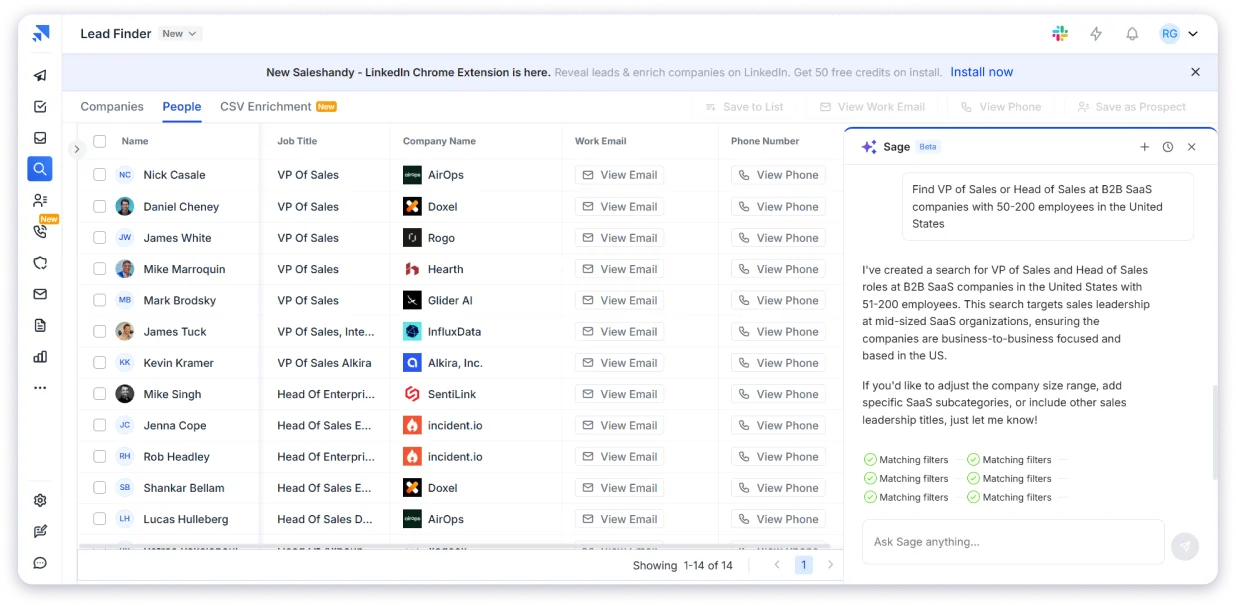
Reviewers keep coming back to that same data quality and value, praising how easily they can filter to ICP-matching contacts and trust that the leads are verified rather than burning credits on dead records (G2).
Also it’s lead finder sits inside Saleshandy’s AI-powered multichannel outbound software, so once my list is built I can run sequences across email, calls, LinkedIn, and WhatsApp in the same place.
For a data buyer that is a bonus, but it does mean I am not paying for a separate sender on top.
Pros
- 852M+ verified contacts across 42M+ companies, the largest verified database here
- AI Lead Search to build a list from a plain-language description of your ICP
- 75+ filters across firmographics, technographics, and buying signals
- Waterfall enrichment across 9 providers for higher match rates
- Real-time verification, so you only spend a credit on data that lands
- CSV enrichment to clean and complete the lists you already have
- Personal email enrichment to find fallback personal emails when work emails fail
- 50% credit rollover and auto-refund on failed reveals
- Built-in multichannel outreach across email, calls, LinkedIn, and WhatsApp
- Transparent, flat pricing with no per-seat cost
Cons
- The free trial is capped at 50 credits
Saleshandy Pricing (Billed Annually)
- Lead Starter: $49/mo, 2,500 credits/mo
- Lead Pro: $79/mo, 4,000 credits/mo
2. Apollo.io
⭐G2 Rating: 4.7/5 (9,600+ reviews)
Apollo.io is the Lusha competitor I see teams try first, and the draw is the database.
It gave me 230M+ verified contacts with 65+ filters and lead scoring, plus a Chrome extension that pulls data across LinkedIn and Gmail.
If you left Lusha because the database felt thin, that breadth is the appeal.
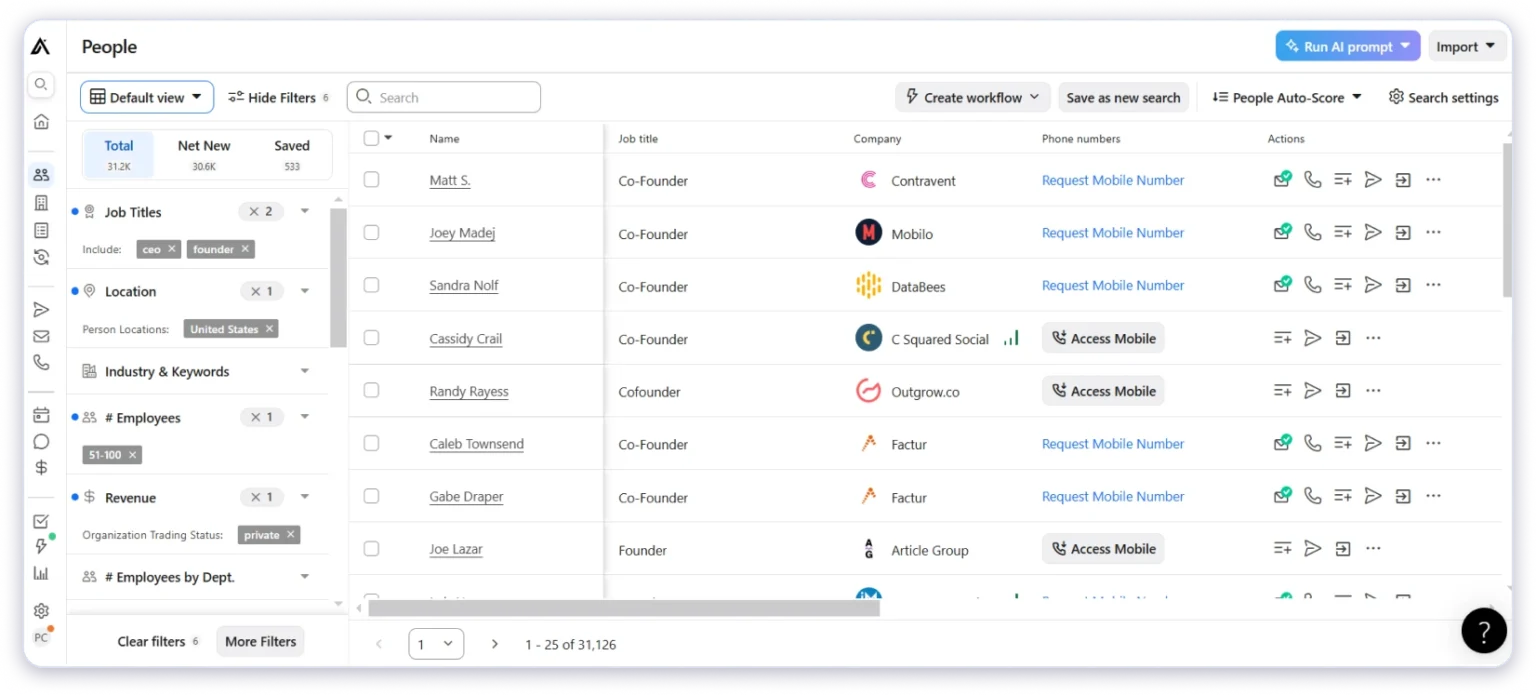
Where I hit friction is accuracy. On stale records I saw the kind of bounce rates reviewers describe, around 10 to 15%, so I was scrubbing lists before a campaign, and phone reveals cost 8 credits against 1 for an email.
One reviewer captured the trade-off I felt too, valuing that Apollo keeps data and follow-up in one place while flagging accuracy as the recurring frustration.
Pros
- 230M+ verified contacts with 65+ filters and lead scoring
- Chrome extension across LinkedIn, Gmail, and Salesforce
- Waterfall enrichment and data-health dedup to keep CRM fresh
- Buying-intent signals to prioritize in-market accounts
- Built-in email sequencing and a US dialer
- Generous free plan to test data quality
Cons
- Email bounce rates around 10 to 15% on stale records
- Export credits drain fast on heavy prospecting weeks
- Per-seat pricing, and phone reveals cost 8 credits versus 1 for an email
- Interface gets cluttered as you scale
Apollo.io Pricing (Billed Annually)
- Free: $0, 900 credits per seat per year
- Basic: $49/seat/mo, 30,000 credits/seat/year
- Professional: $79/seat/mo, 48,000 credits/seat/year
- Organization: $119/seat/mo, minimum 3 seats
Extra reading: Compare more Apollo.io alternatives.
3. ZoomInfo
⭐G2 Rating: 4.5/5 (9,100+ reviews)
ZoomInfo is widely regarded as one of the leading B2B sales intelligence platforms, and the moment I opened it the scale was obvious.
More than 200 million profiles, plus org charts, technographics, and intent signals that go far deeper than Lusha’s contact records. For mapping a buying committee at a large account, nothing else here comes close.
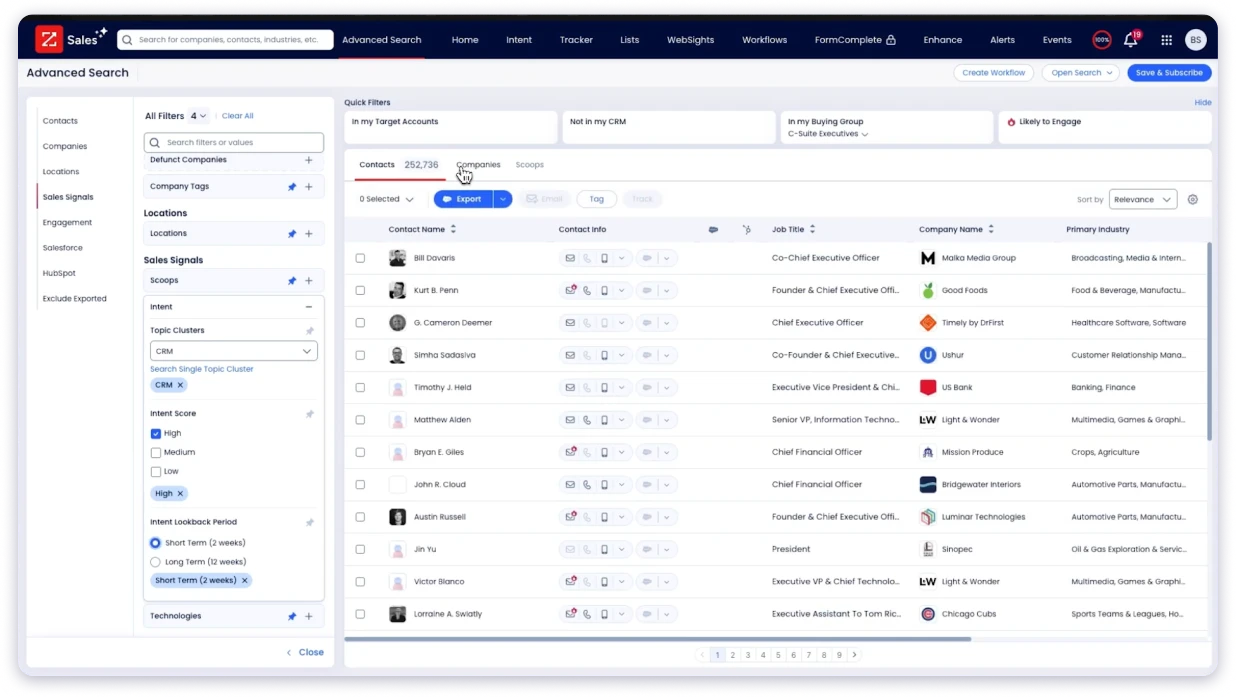
At the top end the accuracy held up. One reviewer notes that enterprise direct dials and verified emails land the first time, which matched what I saw.
The catch shows lower down the market: the same reviewer flags that data on smaller accounts decays faster, and another points out that even a record scored above 85% is not always valid, so I would cross-check SMB contacts before reaching out.
What bugs me most is the cost. ZoomInfo does not publish pricing, you go through sales, and teams on Reddit describe quotes in the tens of thousands with a roughly $15k minimum, which rules it out for startups.
Pros
- More than 200M profiles with org charts and technographics
- Buying intent signals and Copilot AI for pre-call research
- WebSights visitor identification and workflow automation
- Strong enterprise-level direct dials and verified emails
- Broad US data coverage
Cons
- No public pricing, with a roughly $15k/year minimum reported
- Data on SMB and mid-market accounts decays faster
- Steep learning curve on a packed interface
- Accuracy scores do not always reflect real validity
ZoomInfo Pricing (Billed Annually)
- Custom pricing plans
Extra reading: See the full list of ZoomInfo alternatives.
4. Cognism
⭐G2 Rating: 4.5/5 (1,338 reviews)
Cognism is the alternative to Lusha I trust most for European data.
Lusha’s coverage thins outside North America, and when I tested into the UK, DACH, and France, Cognism’s phone-verified mobile numbers gave me the connect rates Lusha could not.
Instead of scraping a number and hoping, Cognism has a team verify mobiles, which you feel on the dials.

The data is deep and GDPR-compliant, with Do-Not-Call screening built in, so prospecting into Europe carried less legal risk than it did with most tools here.
Where I ran into limits was the data economics. One user notes the credits don’t roll over, which stings on a premium plan, and another flags that contact details in the Middle East and Africa can go stale. On Reddit the loudest complaint is price, with teams describing quotes close to three times their budget.
Pros
- Phone-verified mobile numbers with high connect rates in Europe
- GDPR and CCPA-compliant EMEA coverage with built-in DNC screening
- Buying intent data to prioritize accounts
- On-demand verification to cut wasted dials
- List-building and CRM enrichment
Cons
- No public pricing, and quotes often run well above budget
- Credits do not roll over
- Data outside core Europe can be outdated
- Quote-only model with no self-serve free plan
Cognism Pricing (Billed Annually)
- Custom based
Extra reading: Explore more Cognism alternatives
5. Clay
⭐G2 Rating: 4.6/5 (220+ reviews)
Clay is a different kind of alternative to Lusha, and once I understood it the appeal clicked.
Instead of one database, it waterfalls across 150+ providers and layers AI research agents on top, so when one source misses a contact, another can still hit. For coverage no single provider can match, this is the tool.
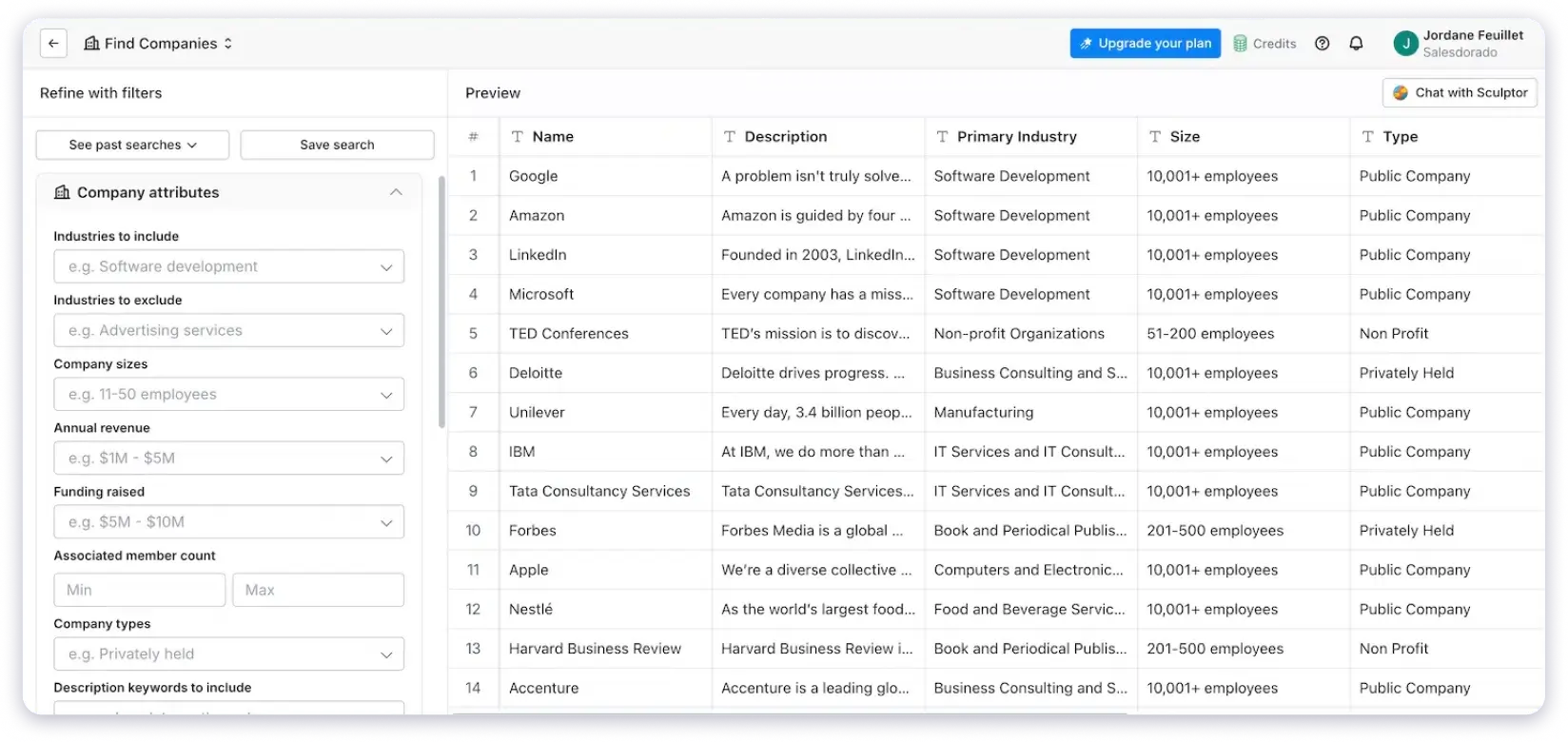
I liked the flexibility, and so do reviewers, who praise the unique data the AI agents surface that a static database cannot. The trade-off is real, though. The learning curve is steep, and even fans admit it takes a while to customize to your ICP.
Costs stack too, since you pay in both Data Credits and Actions, and one Reddit user warned it can get expensive fast as credits start being used.
Pros
- Waterfall enrichment across 150+ providers lifts match rates
- Claygent AI research agents find custom data points automatically
- Conditional logic and AI formatting to run steps only on best-fit leads
- CRM sync, webhooks, and HTTP API destinations
- Native sequencer plus signal and intent tracking
- No charge when an enrichment returns nothing; Data Credits roll over up to 2x
Cons
- Steep learning curve and unintuitive logic
- Costs stack across two credit types
- No proprietary database of its own
- Pricing feels steep for solo or small users
Clay Pricing (Billed Annually)
- Free: $0, 100 Data Credits and 500 Actions per month
- Launch: $167/mo, 2,500 Data Credits and 15,000 Actions per month
- Growth: $446/mo, 6,000 Data Credits and 40,000 Actions per month
- Enterprise: Custom
Extra reading: Get a list of Clay Alternatives
6. RocketReach
⭐G2 Rating: 4.4/5 (1,360+ reviews)
RocketReach is a Lusha competitor built for self-serve simplicity, and that is exactly how it felt.
It runs one of the larger databases here at 700M profiles across emails, phones, and social, and I could buy a plan and start searching without a sales call, which is what individual reps and small teams want.

The breadth and the self-serve access are the strengths.
The friction is in polish and price. Reviewers mention trouble exporting data or syncing to a CRM, and I found pricing higher than expected, with a per-user model that adds up for a growing team (G2).
Pros
- 700M profiles across emails, phones, and social
- Advanced search filters by role, company, and industry
- AI recommendations and automatic list-building
- Browser extension for fast LinkedIn prospecting
- API and bulk lookups for scale
- Self-serve, no sales call to get started
Cons
- Export and CRM-sync issues reported by reviewers
- Pricing runs higher than comparable tools
- Per-user model raises cost as teams grow
- Accuracy can vary by data type
RocketReach Pricing (Billed Annually)
- Essentials: from $48/mo (emails only)
- Higher tiers add phone data
Extra reading: Read the full RocketReach alternatives guide
7. UpLead
⭐G2 Rating: 4.7/5 (820+ reviews)
UpLead is the alternative to Lusha I would pick when accuracy matters more than database size.
It verifies emails in real time at the point of reveal, and across my test list the bounce rate stayed low, which lines up with its 95% accuracy claim. The 180M+ database and 50+ filters, including intent, did the rest.

The clean, verified data with a short learning curve is what reviewers keep crediting for the switch from less reliable tools (G2).
The honest limit is scale. The 180M database is smaller than Apollo’s or RocketReach’s, so on very high-volume prospecting I ran through best-fit matches sooner, and pricing starts higher than some rivals.
Pros
- Real-time email verification at the point of reveal
- 180M+ contacts with 50+ filters
- Technographics and buying intent data
- Bulk and CRM enrichment in one pass
- Chrome extension and API
- 95% accuracy claim with low bounce rates
Cons
- 180M database is smaller
- Higher starting price than some rivals
- Fewer records for very high-volume prospecting
- Phone coverage is thinner than email
UpLead Pricing (Billed Annually)
- Free: 7-day trial with 5 credits
- Essentials: $99/mo
Extra reading: Compare more UpLead alternatives.
8. Lead411
⭐ G2 Rating: 4.1/5 (410+ reviews)
Lead411 is a Lusha competitor aimed at SMB outbound teams in the US, and what won me over was the value.
It bundles buyer intent and growth-trigger alerts into affordable plans, so I got signals that usually sit behind enterprise pricing elsewhere, on top of verified US contact data.
That intent layer and the price-to-data ratio for US prospecting are what reviewers value most (G2).

The catch is coverage and polish. Lead411 is strongest for US data and thinned out when I went international, its ecosystem is smaller than the bigger names, and the lower G2 score reflects more mixed reviews than the leaders here.
Pros
- Verified US emails and direct dials
- Buyer intent data with growth and hiring trigger alerts
- CRM enrichment and integrations
- Chrome extension for prospecting
- Strong price-to-data value for SMBs
Cons
- Strong in the US, thinner internationally
- Smaller ecosystem than the bigger names
- More mixed reviews than top-rated tools
- Database size is not clearly published
Lead411 Pricing (Billed Annually)
- Free: 7-day trial with 50 exports
- Basic Plus: from $49/mo
Extra reading: See more Lead411 alternatives
9. LeadIQ
⭐ G2 Rating: 4.2/5 (1,170+ reviews)
LeadIQ is a Lusha competitor built around the LinkedIn capture workflow.
If your reps live in Sales Navigator, the strength is obvious: I grabbed a verified contact and pushed it into the CRM in a couple of clicks, and the contact tracking flagged when a saved lead changed roles.
That fast, clean capture-to-CRM flow is what reviewers like for SDR teams (G2).
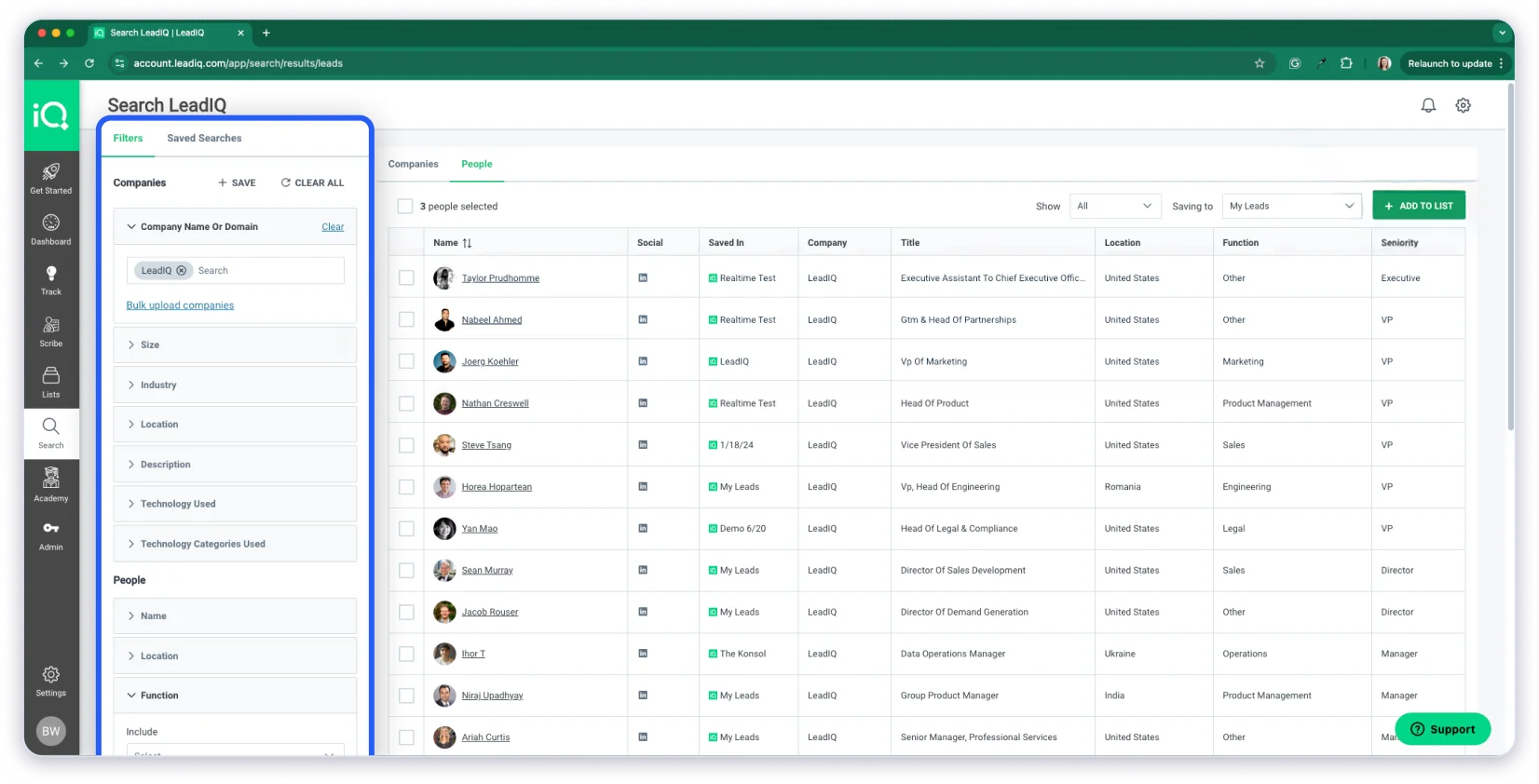
The limit is depth. LeadIQ is a capture-and-route tool rather than a broad searchable database, so it is not where I would build a large list from scratch, and reviewers note credits run out faster than expected on heavy prospecting.
Pros
- One-click capture from LinkedIn and Sales Navigator into your CRM
- Contact tracking with job-change alerts
- Verified emails and direct dials
- Clean integrations with Salesforce, Outreach, and Salesloft
- AI message personalization
Cons
- Not a broad searchable database for list-building
- Credits deplete quickly on heavy prospecting
- Less useful outside a LinkedIn-driven workflow
- Database size is not published
LeadIQ Pricing (Billed Annually)
- Free: 50 credits to start
- Essential: from $45/mo
Extra reading: Explore more LeadIQ alternatives
10. Hunter.io
⭐ G2 Rating: 4.5/5 (650+ reviews)
Hunter.io is a easy to use alternative to Lusha for one job: finding and verifying email addresses.
It is fast, simple, and cheap, and when all I needed was emails and not phone numbers, that focus was exactly right.
The email accuracy and how easy the domain search and verifier are to use are what reviewers praise for quick, low-bounce lists (G2).
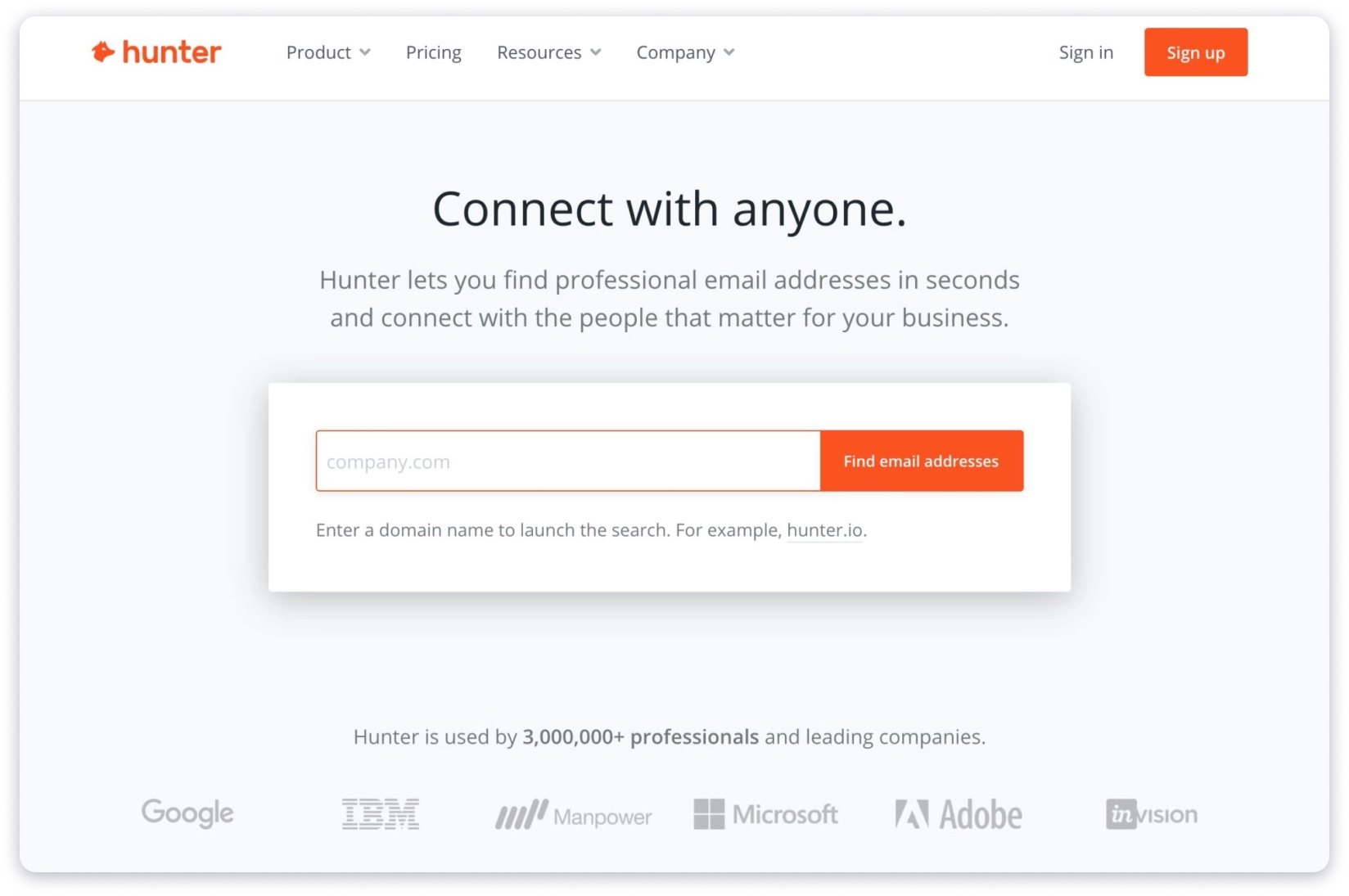
The obvious limit is scope. Hunter is email-only, with no phone data and no broad contact database, so if you depend on direct dials it is too narrow for a full outbound motion.
Pros
- Domain search to find company emails
- Email finder and a reliable email verifier
- Bulk tasks and a clean API
- Lightweight cold email campaigns built in
- Affordable, with a useful free tier
Cons
- Email-only, with no phone data
- No broad searchable contact database
- Too narrow for dial-based outbound
- Limited firmographic depth
Hunter.io Pricing (Billed Annually)
- Free: 50 searches and verifications per month
- Starter: from $34/mo
11. Seamless.AI
⭐ G2 Rating: 4.4/5 (5,300+ reviews)
Seamless.AI is a Lusha competitor built around a real-time AI search engine.
Rather than serving a static list, it searches the web live to assemble contact data, and it claims one of the largest pools here at 1.6B+ emails and 448M+ phone numbers.
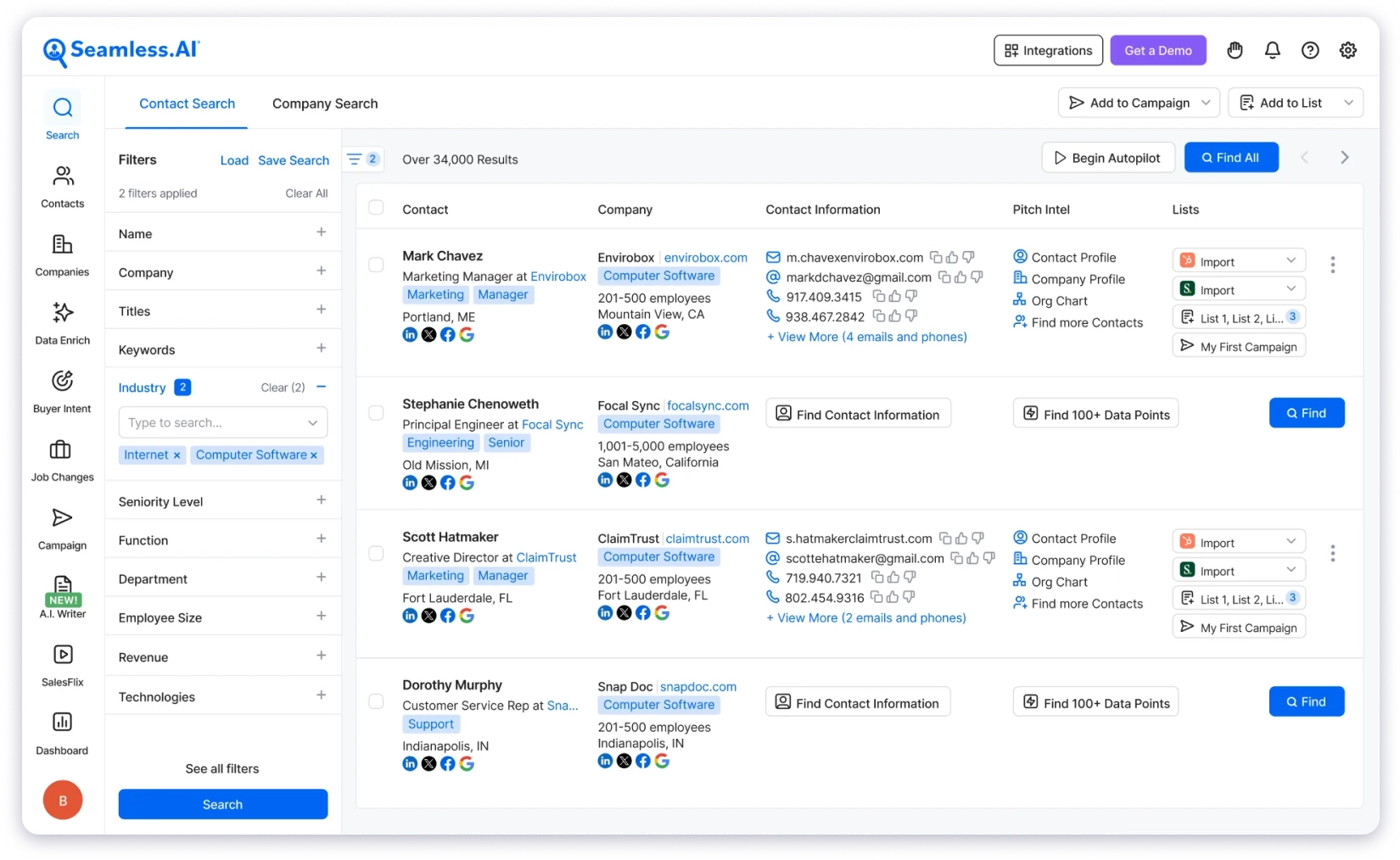
The reach is the appeal, and free credits let me test before committing (G2). The recurring complaint, and what I ran into, is accuracy.
Because the data is assembled in real time, quality varies more than with verified-first providers, so list scrubbing matters, and pricing turns opaque and quote-driven once you move past the free credits.
Pros
- Real-time AI search that builds lists on the fly
- A very large pool of emails and phone numbers
- Chrome extension and CRM integrations
- Buyer intent available as an add-on
- Free credits to test before committing
Cons
- Accuracy varies because data is assembled live
- Opaque, quote-only pricing past the free tier
- Lists need scrubbing before outreach
- Aggressive upsell reported by some reviewers
Seamless.AI Pricing (Billed Annually)
- Free: 50 credits to start
- Paid tiers: custom, quote-only
Extra reading: See the best places to buy a verified B2B email list
12. Kaspr
⭐G2 Rating: 4.4/5 (830+ reviews)
Kaspr is a budget-friendly Lusha alternative for European prospecting.
It is LinkedIn-first, and in one click I pulled verified work emails and direct dials, with data aggregated from 150+ sources and a clear focus on GDPR-aligned European coverage.
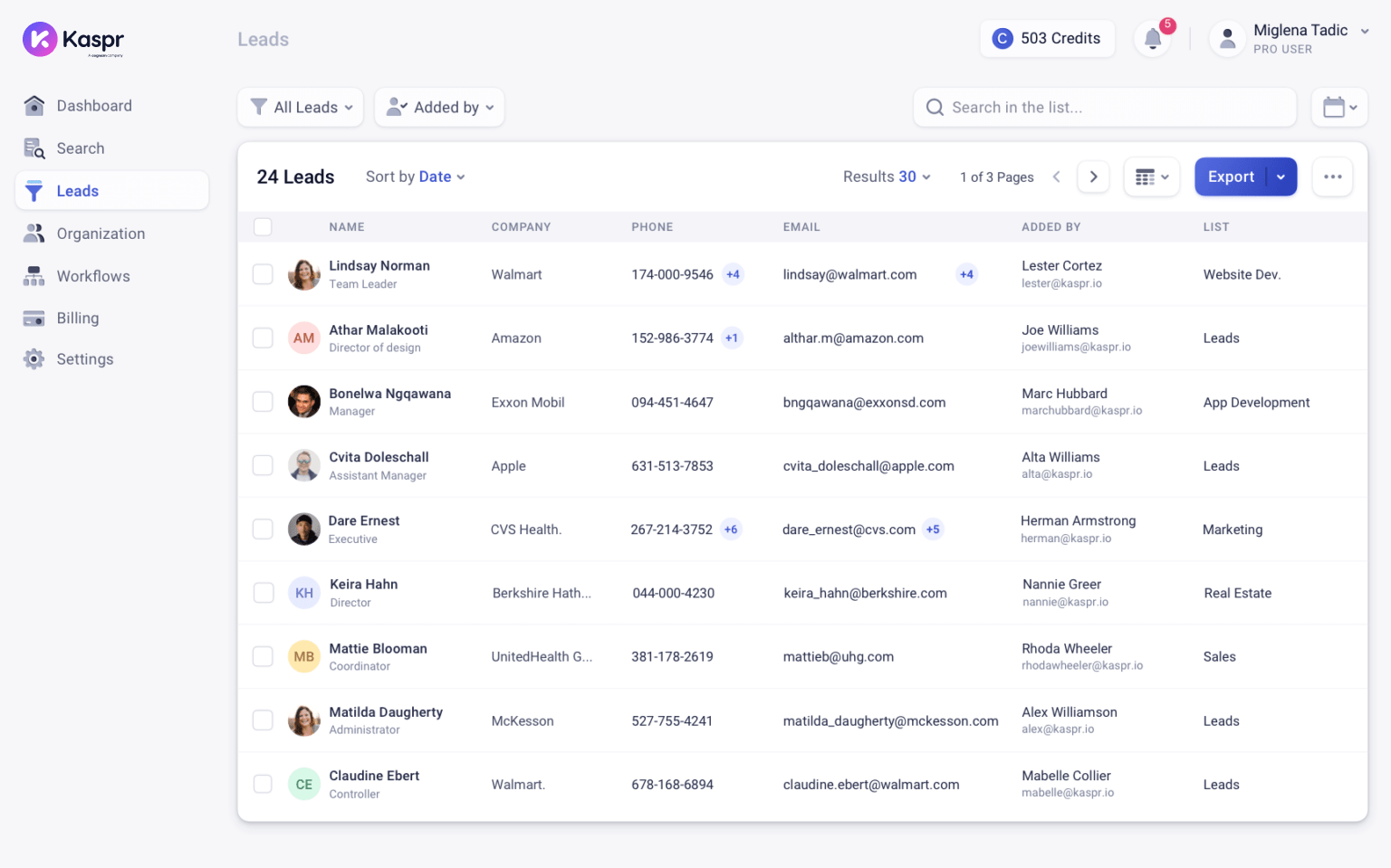
How fast and reliable the extension is for one-click discovery is exactly what reviewers praise (G2), and the unlimited B2B email credits answer the running-out-of-credits complaint head-on.
The limits are credits and geography. Even paying users note the credit system can feel restrictive once phone reveals come in, and another flags that coverage is spotty in emerging regions.
Pros
- One-click capture from LinkedIn and Sales Navigator
- Unlimited B2B email credits on paid tiers
- GDPR-aligned European data from 150+ sources
- CSV enrichment and CRM integrations
- Shared team credits and usage reporting
Cons
- Coverage strongest in Europe, thinner in emerging regions
- Phone and direct-email credits are capped per year
- Per-user pricing on paid plans
- No native sending engine
Kaspr Pricing (Billed Annually)
- Free: 15 B2B email credits and 5 phone credits to start
- Starter: €45/user/mo, unlimited B2B email credits
- Business: €79/user/mo, higher phone and export limits
Extra reading: Read the full Kaspr alternatives guide
Which Lusha Alternative Should You Choose?
There is no single best Lusha alternative, only the one that fits how you prospect.
If your outbound is mostly European phone work, Cognism earns its premium. If you want maximum coverage and have the patience to build, Clay is unmatched. If you only need emails, Hunter keeps it simple and cheap.
But if your first concern is a large, accurate, verified database that doesn’t charge you for bad data, Saleshandy is the one I’d start with.
You get 852M+ verified contacts, real-time verification before you pay, and credit rules built around your budget.
You can try Saleshandy with 50 free credits, no credit card required, and check the data quality against your own market before you decide.
Frequently Asked Questions
1. What is the best Lusha alternative in 2026?
For most teams, Saleshandy is the best overall Lusha alternative because it pairs the largest verified database on this list, 852M+ contacts, with real-time verification and credit rollover. Apollo.io is the best free starting point, and Cognism is the best pick for European data.
2. Is there a free Lusha alternative?
Yes. Apollo.io offers the most generous free plan, while Saleshandy, Hunter.io, LeadIQ, and Kaspr all let you start free with a limited number of credits or searches. These free tiers are best used to test data quality before you commit.
3. Why do teams switch from Lusha?
The most common reasons are credit costs that climb on phone reveals, credits being spent even on unverified data, a database that is smaller than several rivals, and accuracy figures that vary across Lusha’s own pages.
4. Which Lusha alternative has the largest database?
Among verified contact databases, Saleshandy is the largest on this list at 852M+ contacts, ahead of RocketReach at 700M and Apollo at 230M+. Seamless.AI claims a larger pool, but its real-time data tends to need more scrubbing.
5. Which Lusha alternatives are best for European data?
Cognism and Kaspr are the strongest Lusha alternatives for European coverage, with phone-verified mobiles and GDPR-aligned data across the UK, DACH, and the wider EU.
6. Are there sites like Lusha with built-in outreach?
Yes. Saleshandy and Apollo.io both include sending. Saleshandy goes furthest, adding multichannel sequences across email, calls, LinkedIn, and WhatsApp on top of its database, while most data tools stop at contact records.